 By Matthew Flinders
Centre-left social democratic parties appear to have been left behind in the last decade. ‘‘Early in this century you could drive from Inverness in Scotland to Vilnius in Lithuania without crossing a country governed by the right,’’ The Economist highlighted just weeks ago, ‘‘the same would have been true if you had done the trip by ferry through Scandinavia. Social democrats ran the European Commission and vied for primacy in the European Parliament.’’ But recently their share of the vote has plunged- they have been ‘left behind.’
The challenge for anyone thinking about the future of social democracy is that we no longer have a vocabulary of politics that resonates with the broader public sphere. Even the title of this little piece – ‘Left Behind?’ – embraces an arguably tired and prosaic attachment to a notion of politics that remains tied to a ‘left-right’ spectrum. One might argue whether this ‘spectrum approach’ was ever really capable of grasping the subtle complexities of political life – either at the personal, party, organizational, or social level – let alone the innate irrationalities of political life itself with its inevitable mixture of messiness and compromise. A ‘new political project’ from this perspective might focus not simply on the concept of ‘the centre left’ but on the very nature of collective politics itself. This ‘new approach’ offers huge potential in terms of redefining and revitalising democratic politics – a rejection of the defensive and callowed version of social democracy that currently exists in the wake of the global financial crisis.
The simple argument here is that any starting point in a discussion about revitalizing politics – and therefore society – cannot be rooted in conceptions of either ‘the left’ or ‘the right’ (or ‘the centre’). Such historical signposts are now too crude to grasp the social complexity that defines the twenty-first century. The research of Jonathan Wheatley, for example, suggests that the terms ‘left’ and ‘right’ are of little relevance to the contemporary electorate. “Evidently, left and right are amorphous concepts that mean different things to different people at different times’’, Wheatley notes, “Amongst younger, less well-educated and especially less politically interested users, items belonging to the economic scale were barely coherent at all. For these voters, the notions of ‘left’ and ‘right’, at least in economic terms, are really not meaningful at all”. The electoral basis of democracy therefore needs to be accepted not only in terms of its complexity but also in terms of the decline of monolithic class groups, the re-scaling of economic activity, combined with a shift towards single-issue or valence politics. The rise of political complexity therefore reflects a broader increase in social complexity.
If I were being provocative I might dare to suggest that, at one level, there was no such thing as ‘the public’ because as any politician (or impact-engaged academic) knows there are in fact ‘multiple publics with whom it is necessary to engage in multiple ways.’ This argument may have academic roots (in this case it’s Michael Burawoy’s work on public sociology) but in many ways it speaks to the challenges faced by thinkers, scholars, politicians, and policy-makers who aim to craft a new political project for what really are ‘new times.’ The challenge for any of the ‘mainstream’ political parties – or for any of the new ‘insurgent’ parties – is to learn how to engage with multiple audiences in multiple ways with a message that has resonance and meaning while also being accessible. From this perspective the ‘traditional’ parties too often appear like dinosaurs wandering aimlessly across the political savannah who don’t really understand where they are going and why. The terrain, the savannah, has become more complex and yet the beasts remain incredibly cumbersome with their committees, conferences, headquarters and ‘desiderata’ of an arguably earlier political age. The elements of this increased complexity are diverse, contested, and inter-related (social media, increased public expectations, individualization, migration, etc.) but they culminate in a well-known focus on ‘the problem of democracy’ with its ‘disaffected democrats’ and ‘critical citizens.’ (The irony for the Labour Party is that, as Andrew Gamble has argued, ‘the Corbyn effect’ was fuelled by anti-politics and populist sentiment within an established political party.)
One way of thinking about this problem – and possibly a solution – is to think of Zygmunt Bauman’s work on ‘liquid modernity’, which when stripped down to its core components, emphasizes the decline in traditional social anchorage points (jobs for life, national identity, religion, marriage, close knit communities, trade unions, etc.). All that was once solid has apparently melted away and has been replaced with a hyper-materialism that ultimately leaves the public(s) frustrated. To make such an argument is to step back to C Wright Mills classic The Sociological Imagination (1959) and his arguments about ‘the promise’ and ‘the trap.’ We have identified a perceived trap in the form of the decline of the centre left and the dominance of market logic across and within social relationships. But where is ‘the promise’ in terms of a new vision possibly inspired by the insights of the social sciences that cuts across traditional partisan lines?
Politicians make promises but the public no longer perceives that these promises are ever delivered, or fail to understand exactly why – as Bernard Crick argued – democratic politics tends to be so messy. Politicians have no simple solutions to complex problems and nor do I. And yet, as a way of generating a discussion, I would suggest that ‘the promise’ of social democratic politics will only be achieved when three elements are secured:
- A Clarity in terms of not only a stable vision of why ‘working together’ through collective endeavours matters but also in terms of how it can provide meaning, , control and choice;
- A Confidence in terms of a positive political narrative that inspires belief and hope, and redefines specific ‘threats’ as opportunities; and,
- A clear and confident ‘language of politics’ that is not defensive or defined by the past, that makes no mention of Guild Socialism, Golden Ages, Fabianism, Richard Crossman, ‘Lefts’ and ‘rights’, etc.
The challenge for the Labour Party in 2020 already looks greater than it did in 2015, not least because the party too often appears engulfed in (internal) tribalism within an increasingly post-tribal world. The challenge for a future political leader is to reject and re-frame the dominant anti-political sentiment for the simple reason that it is rarely anti-political in nature and more accurately interpreted as frustration with the current system. Redefining ‘anti-politics’ as ‘pro-a-different-way-of-doing-politics’ lies at the heart of any new political project that seeks not to be left behind.
Matthew Flinders is Professor of Politics and founding director of the Sir Bernard Crick Centre for the Public Understanding of Politics at the University of Sheffield. He is also Chair of the Political Studies Association of the United Kingdom. During the Spring Bank Holiday he hopes to be ‘left behind’ – in the sense of slipping away from the hustle and bustle of day-to-day life – in the quiet Norfolk town of Cromer. He is the author of Defending Politics: Why Democracy Matters in the 21st Century.
If you enjoyed this blog, you may also be interested to read Depoliticization, governance and the state by Matthew Flinders and Matt Wood.
This post was originally published on the Oxford University Press blog at http://blog.oup.com/2016/06/social-democracy-politics-complexity/ on 2nd June 2016 and is reposted under the Creative Commons license
 Mike Hemmings
 Nat O’Connor, IRiSS, Ulster University
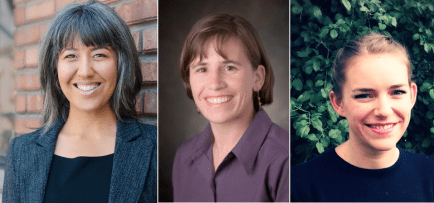 Genevieve Fuji Johnson, Laura Black and Katherine Knobloch
 Social security systems are being transformed according to untested assumptions about how benefit recipients act. Sharon Wright provides evidence to challenge several core myths on which British welfare reforms have been based. There is a wide gap between the dominant way in which welfare subjects are represented in political and media debate and the lived experiences of those receiving benefits and using support services.


 By Rikki Dean
 By Yijia Jing, Policy & Politics Editorial Advisory Board member, Fudan University, Shanghai
 Policy & Politics Journal Blog