There is something very odd and bizarrely impressive about Donald Trump’s approach to democratic politics: it is quite obviously undemocratic. Indeed, if anything, his campaign is fueled by anti-political sentiment and populist slogans. It’s strong stuff. So strong that it deserves to be recognized in the form of a new political ideology: “Trump-ism” Eponymous…and yet also synonymous with the failure and farce of American politics. I’ve tried so hard not to write a piece about “you know who” Trump. I really have! It’s just too obvious and to some extent just too easy but as his apparent popularity in the United States grows so does my concern about who might actually hold the most powerful political office on the planet.
But in many ways my concern has nothing to do with partisanship, less to do with politics and everything to do with democracy.
I don’t care what party Mr Trump belongs to, I know that politics is a worldly art, but it strikes me that Donald is not democratic. Continue reading →
Britain’s public assets are now the subject of a giant boot sale. The great rolling privatisation juggernaut not only includes the £4bn Green Investment Bank, and the bailed-out Lloyds Bank but is now eyeing up assets like Channel 4 and the Met Office. The government hopes that together they will deliver £32bn in revenue this year alone from the sell-off.
Privatisation was originally sold as the route to Mrs Thatcher’s much vaunted ‘popular capitalism’. Yet shares bought by the public through privatisation have mostly been sold immediately. Far from spreading wealth, decades of sell-offs have merely skewed the economy even more heavily in favour of a few private owners helping to fuel Britain’s widening wealth and income gap.
No longer able to claim it will spread popular capitalism – always a myth – the government has a new defence: sales will help pay down the deficit. Yet it makes little sense to use long term capital assets to finance a temporary revenue gap. Continue reading →
Tennessee State University, Northern Arizona University, Texas Southern University, Winston-Salem State University, Mojave High Scool, Lawrence Central High School, Umpqua Community College, Harrisburg High School, Sacramento City College, Savannah State University, Southwestern Classical Academy, Bethune-Cookman University, Frederick High School, Wisconsin Lutheran High School, Marysville Pilchuck High School…. the list school shootings goes on (and on). Over twelve thousand people died in the United States last year from gunshot wounds. Since the Sandy Hook massacre of 2012 there have been no fewer than 161 mass shootings. Does Obama’s frustration suggest that democracy is part of the solution or part of the problem?
It would seem that President Obama has a new prey in his sites. It is, however, a target that he has hunted for some time but never really managed to wound, let alone kill. The focus of Obama’s attention is gun violence and the aim is really to make American communities safer places to live. The New Year therefore brought with it an Executive Order from the President that requires all firearms sellers to seek a licence and initiate background checks on purchasers. There is no doubt that this will make the process of buying a gun a slightly slower and more cautious process but in reality it will do little to reduce the scale of gun crime. Obama knows this well and his measures are themselves borne from a frustration that has seen the Congress repeatedly block his attempts to push through more significant measures.
The killing of twenty school children in Newtown, Connecticut, in December 2012 fuelled a national discussion about gun control. Mass killings by gunmen in civilian settings, children covered in blankets, screaming parents rushing to see if their child has missed the carnage…the emotive politics of gun control turned from individual liberty and protection to individual responsibility and collective freedom but Obama’s attempt to limit the availability of semi-automatic assault weapons was defeated in the Senate. Body bags and public support, it seemed, was not enough to deliver change.
And yet crises – as political science frequently tells us – generally create ‘windows of opportunity’ into which radical new policy shifts can occur. Not, it would seem, in the case of gun atrocities in America. The paradox of the American psyche is that Obama’s call for restrictions on the sale of guns actually stimulated the biggest spike in gun sales that the country had seen for nearly two decades (1.6 million guns sold in December 2015).
So is democracy the problem or the solution?
Democracy is, as Bernard Crick sought to underline in his Defence, inevitably slow and cumbersome. It is messy simply because it somehow has to squeeze simple decisions out of a vast array of competing and often intractable social demands. As a result the democratic process tends to contain multiple veto points that can stifle responsiveness; a smooth policy change is suddenly turned into a sluggish and grating process that too easily morphs into gridlock and inaction.
Could it therefore be that the problem with democracy is that it prevents the implementation of measures that look eminently sensible to the rest of the world?
To some extent this might be true and the interesting element of Obama’s recent move is that by using an executive order to promulgate gun control he is in effect circumnavigating elements of the democratic process. But even here his weakness shines through. First, in the sense that by adopting this approach he risks setting a precedent for future presidents who have a very different approach to gun control and wish to shift the balance via executive order in a very different direction. And (secondly) the significance of the measures are so far removed from any notion of actually disarming the country that they could be interpreted as a sign of weakness rather than strength.
Mr Obama is clearly using some of his final ‘lame-duck’ year freedoms to push the issue of gun control back onto the political agenda. But at the moment the lack of political will is making gun control look too much like ‘a sitting-duck’ for the National Rifle Association and other pro-gun groups who want to take it back off the agenda. Some opinion polls suggest that the mood of the American public is shifting away from unlimited ownership but the pace of change appears glacial. In some ways American gun control has regressed rather than progressed in recent years as the federal ban on military assault weapons and high-capacity magazines that existed between 1994-2004 has not been renewed by Congress. But it’s too easy to exaggerate the threats or to ridicule gun toting Americans but the reality is far more sad: most deaths occur from guns being used to commit suicide, or are found by children and toddlers who mistake them for toys with devastating effects. When it comes to gun control and American politics then maybe – just maybe – could there be a case for a benevolent dictator who understands that the ballot and bullets, just like guns and safety, just don’t mix?
…. Reynolds High School, Seattle Pacific University, Kennedy High School, Georgia Gwinnet College, Paine College, South Carolina State University, Purdue University, Los Angeles Valley College, Rebound High School, Widener University, Delaware Valley School, Berrendo Middle School, Magne High School, Arapahoe High School, Brashear High School, Carver High School, Massachusetts Institute of Technology….
Matthew Flinders is Professor of Politics and Founding Director of the Sir Bernard Crick Centre for the Public Understanding of Politics at the University of Sheffield. He is also currently Chair of the Political Studies Association of the United Kingdom. He was once, for a very short time, a member of the British Army but had to leave because he did not like guns or loud bangs.
An invitation from the British Library to give the first in a new public lecture series called “Enduring Ideas” was never a request I was going to decline. But what “enduring idea” might I focus on and what exactly would I want to say that had not already been said about an important idea that warranted such reflection? The selected concept was “democracy” and the argument sought to set out and unravel a set of problems that could – either collectively or individually – be taken to explain the apparent rise in democratic disaffection.
Such is the world we live in that a lecture is no longer a lecture but rapidly becomes a multi-media “artefact” and the beginning of a global discussion. I suppose this is probably not quite true of all lectures, I’ve been to quite a few that really do need to be forgotten, but I’m pleased to say that the intellectual ecosystem seems to have exploded in all sorts of ways that I could never have imagined. Continue reading →
First, welfare state resilience: while appropriate, perhaps, to Pierson’s analysis of ‘early’ retrenchers like Reagan in the US, or Swedish Social Democrats in the 1990s, this term no longer reflects the variety and depth of change – especially in social security. Second, globalisation: here Pierson is on more certain ground. On the one hand, there are strong nationally based drivers of change- such as ageing and health care costs. On the other, individual welfare states have quite distinct economies (and institutions) and these filter the influence of globalisation. Welfare states remain specific and diverse and are not flattened into conformity by globalisation. Continue reading →
Politics is a worldly art. It is a profession that is founded on the ability to instill hope, convince doubters and unite the disunited – to find simple and pain free solutions to what are in fact complex and painful social challenges. In recent months a small seam of scholarship has emerged that explores public attitudes to politics and politicians through the lens of Daniel Kahneman’s work on behavioral economics and psychology. ‘Think fast’ and the public’s responses are generally aggressive, negative and hopeless; ‘think slow’ and the public’s responses are far more positive, understanding and hopeful. Such findings resonate with my own personal experience and particularly when I founded a “Be Kind to Politicians Party” as part of a project for the BBC and it was amazing how many people I was able to recruit in a fairly short time.
The aim of telling this tale is not to make the reader feel sorry for politicians, or really to defend them or their profession. The ‘aim’ – if there really is one – is to promote the public understanding of political life and to steer it away from over-simplistic representations of sleaze, scandal and self-interest. (P.J. O’Rourke’s Don’t Vote for the Bastards – It Just Encourages Them! suddenly springs to mind.) Continue reading →
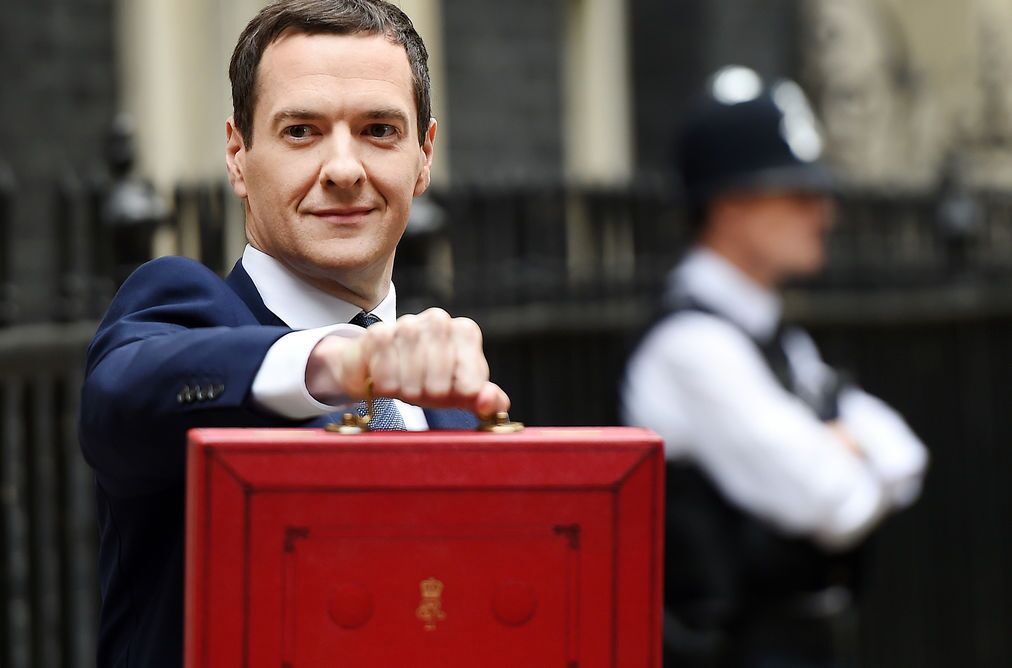
George Osborne always plays the role of the smiling conjurer who pulls the rabbit out of the hat and steals the scene with aplomb. In his 2015 spending review and autumn statement, the surprise announcement was that cuts to tax credit will not be as stringent as expected – although housing benefit claimers are the losers. Concealed within the chancellor’s hat are cuts of more than 50% in grants to local government and tense optimism about the growth, employment and pay forecasts on which everything depends.
The chart below gives the main winners and losers in the spending review over the period up to 2019-20. Cuts are legion. The winners are the big players – the NHS and pensions – both accounting for about a fifth of total spending – which receive real increases of 3 to 4%.
Pensioners will benefit from the transition to the new flat-rate pension from next April onwards, increasing spending in this area by some 4%.
International development has a 21% increase, although some of the new money will be spent to aid security objectives and some in the UK on Syrian refugees. The new Single Intelligence Account for the security Continue reading →
The Cabinet Office is currently undertaking a review of the role and remit of the Office of the Commissioner for Public Appointments, which is being conducted by Sir Gerry Grimstone. As part of this review, in September I presented to the Committee on Standards in Public Life the findings of research conducted by Matthew Flinders and me regarding the UK’s experience of public appointments.
Upon the recommendation of the first Committee on Standards in Public Life, the Office of the Commissioner for Public Appointments (OCPA) was established in 1995 to improve confidence in the system by addressing widespread beliefs that ministerial appointments were not always made on merit. By closely regulating the appointments within its remit, OCPA sought to ensure that ministerial appointments were made solely on merit, rather than party political loyalties or personal ties. Indeed, comparative research reveals that the patronage capacities of British ministers are now amongst the lowest in Europe; and that OCPA is an exemplar in terms of promoting probity and integrity.
Nonetheless, whilst the capacity of ministers to intervene in public appointments has been reigned in, the involvement of parliamentarians has expanded through the introduction of pre-appointment scrutiny in 2007; and the relationship Continue reading →
by Matthews Flinders, Co-Editor of Policy & Politics. This was originally posted on the OUP blog and is reposted here with kind permission.
For many commentators the 2015 General Election was the first genuinely ‘anti-political’ election but at the same time it was one in which the existence of a major debate about the nature of British democracy served to politicize huge sections of society. The surge in party membership for the Scottish National Party, for example, with over 100,000 members at the time of the election (i.e. far more members than soldiers in the whole British Army) deserves some explanation in a context dominated by the rhetoric of disenchantment and decline. The subsequent election of Jeremy Corbyn as Leader of the Labour Party with over a quarter of a million votes (59.5% of those cast) raises further questions about ‘anti-politics being all the rage’.
The simple fact is that ‘anti-politics’ is a myth. It is also a dangerous myth due to the manner in which it seeks to perpetuate cynicism when the evidence is arguably far more positive. The truth is that the results of the 2015 General Election and the Labour leadership contest were actually more anti-establishment than anti-political. Take, for example, the influential writing and public interventions of Owen Jones [The Establishment: And How They Get Away With It, 2014] or Russell Brand’s raw anti-elite, anti-establishment, anti-elections nihilism that was Continue reading →
May 2015 saw another election victory for the Conservative party in a UK general election, as they formed a majority government at Westminster. Many are concerned about the social equity issues arising from some of the policy decisions already announced, not least the £12 billion in welfare cuts announced in the July budget. However, as we suggest in our paper past research shows we should not be surprised about the direction policy is taking – Julian LeGrand’s work analysing the spending priorities implicit in the cuts meted out by the Thatcher government between 1979 and 1983 showed not only that they were focused on welfare, but that they protected “middle class” services such as education and health. These are also the services that Conservative voters were most likely to use. Continue reading →






 Policy & Politics Journal Blog