Hear our top ten tips on how to get published in Policy & Politics in this 4 minute interview with Co-Editor Sarah Ayres and Chair Alex Marsh from the University of Bristol.
Thomas Schillemans talks about his special issue of Policy & Politics with Jon Pierre on media and governance published in January 2016 and why his topic is important.
There is something very odd and bizarrely impressive about Donald Trump’s approach to democratic politics: it is quite obviously undemocratic. Indeed, if anything, his campaign is fueled by anti-political sentiment and populist slogans. It’s strong stuff. So strong that it deserves to be recognized in the form of a new political ideology: “Trump-ism” Eponymous…and yet also synonymous with the failure and farce of American politics. I’ve tried so hard not to write a piece about “you know who” Trump. I really have! It’s just too obvious and to some extent just too easy but as his apparent popularity in the United States grows so does my concern about who might actually hold the most powerful political office on the planet.
But in many ways my concern has nothing to do with partisanship, less to do with politics and everything to do with democracy.
I don’t care what party Mr Trump belongs to, I know that politics is a worldly art, but it strikes me that Donald is not democratic. Continue reading →
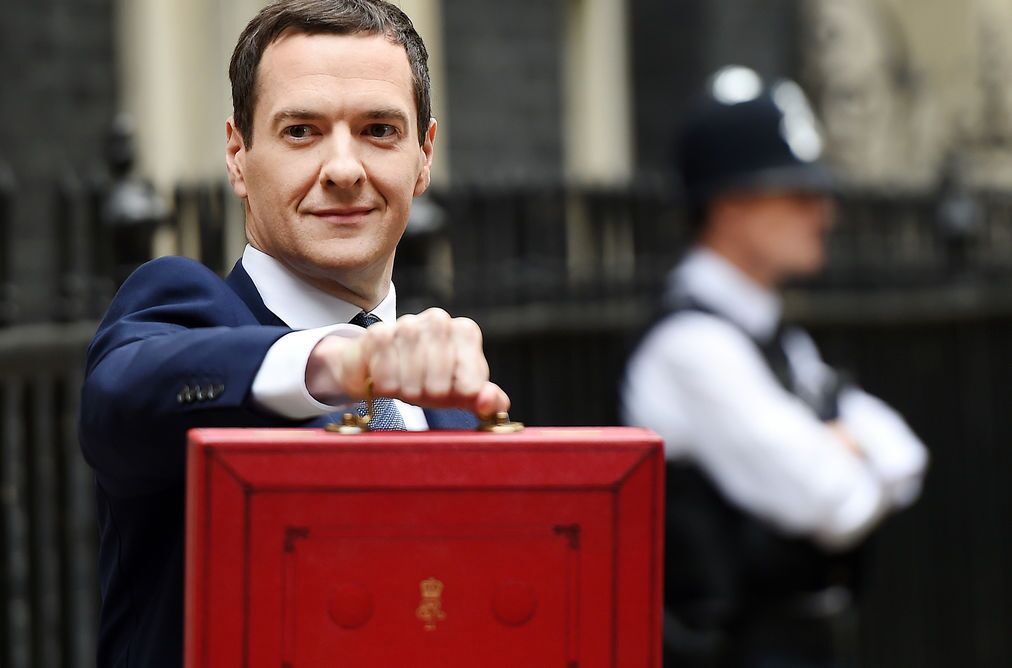
George Osborne always plays the role of the smiling conjurer who pulls the rabbit out of the hat and steals the scene with aplomb. In his 2015 spending review and autumn statement, the surprise announcement was that cuts to tax credit will not be as stringent as expected – although housing benefit claimers are the losers. Concealed within the chancellor’s hat are cuts of more than 50% in grants to local government and tense optimism about the growth, employment and pay forecasts on which everything depends.
The chart below gives the main winners and losers in the spending review over the period up to 2019-20. Cuts are legion. The winners are the big players – the NHS and pensions – both accounting for about a fifth of total spending – which receive real increases of 3 to 4%.
Pensioners will benefit from the transition to the new flat-rate pension from next April onwards, increasing spending in this area by some 4%.
International development has a 21% increase, although some of the new money will be spent to aid security objectives and some in the UK on Syrian refugees. The new Single Intelligence Account for the security Continue reading →
by Tessa Coombes, PhD Researcher at Bristol University
For the final plenary session of the conference Prof. Andrew Gamble, from Cambridge University, took us back to the issue of democracy and its ability to survive and even thrive. We were reminded that for the first time in the modern state system authoritarian regimes are in retreat and representative democracy, in some form or other, is on the rise.
Representative liberal democracies have been described as the least admirable form of governance not least because of their inability to take difficult decisions and their short term thinking. Despite this, in the 20th century, representative democracy came to be seen as an ideal state. But it now seems we are in a time of transition, where there is a real disengagement and disillusionment with mainstream politics, where the choice is narrowing and where people are indifferent to their right to vote. This crisis of representative politics reflects a crisis of trust in our politics and politicians. Once more, despite this process, representative democracy Continue reading →
by Tessa Coombes, guest blogger for P&P conference 2015
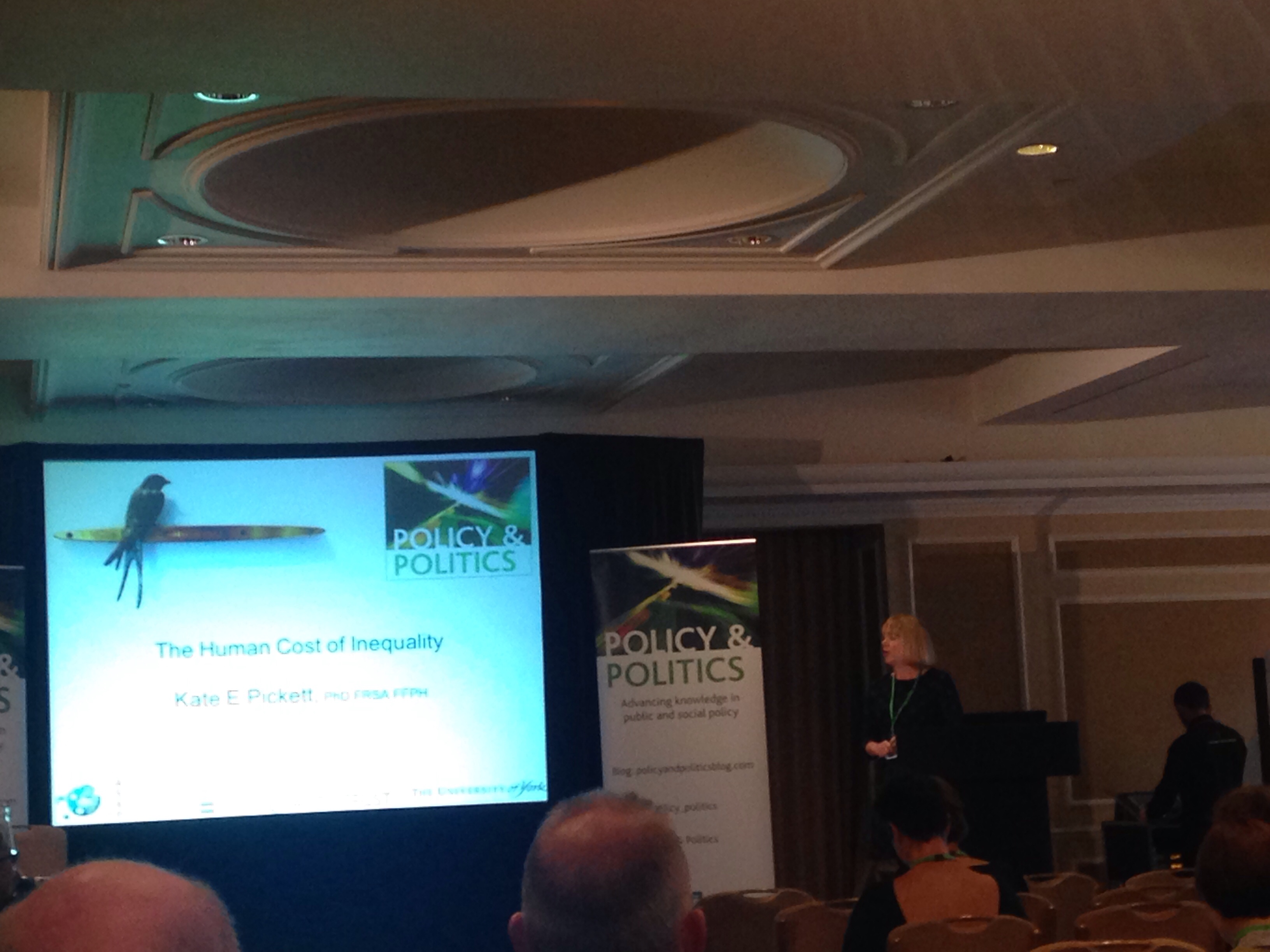
The second day of the conference started with an excellent presentation from Prof. Kate Pickett, from the University of York. Kate co-authored the influential book “The Spirit Level” which provided evidence to illustrate how almost everything is affected not by how wealthy a society is but how equal it is. The book was written at a time when inequality was not being discussed, and even now, whilst it is indeed the subject of much more debate on an international stage, it is still only rhetoric, and we are still waiting for this to translate into real action.
There are some shocking statistics that illustrate the level of the challenge we face across the globe, such as the one used by Oxfam – the 85 richest people on the planet have the same wealth as 3.5 billion of the poorest people – illustrating a truly grotesque level of inequality. But, as Kate pointed out, we need to remember that these are not just meaningless, abstract numbers, they represent real human suffering and have real impacts. Continue reading →
by Tessa Coombes, guest blogger for P&P Conference 2015.
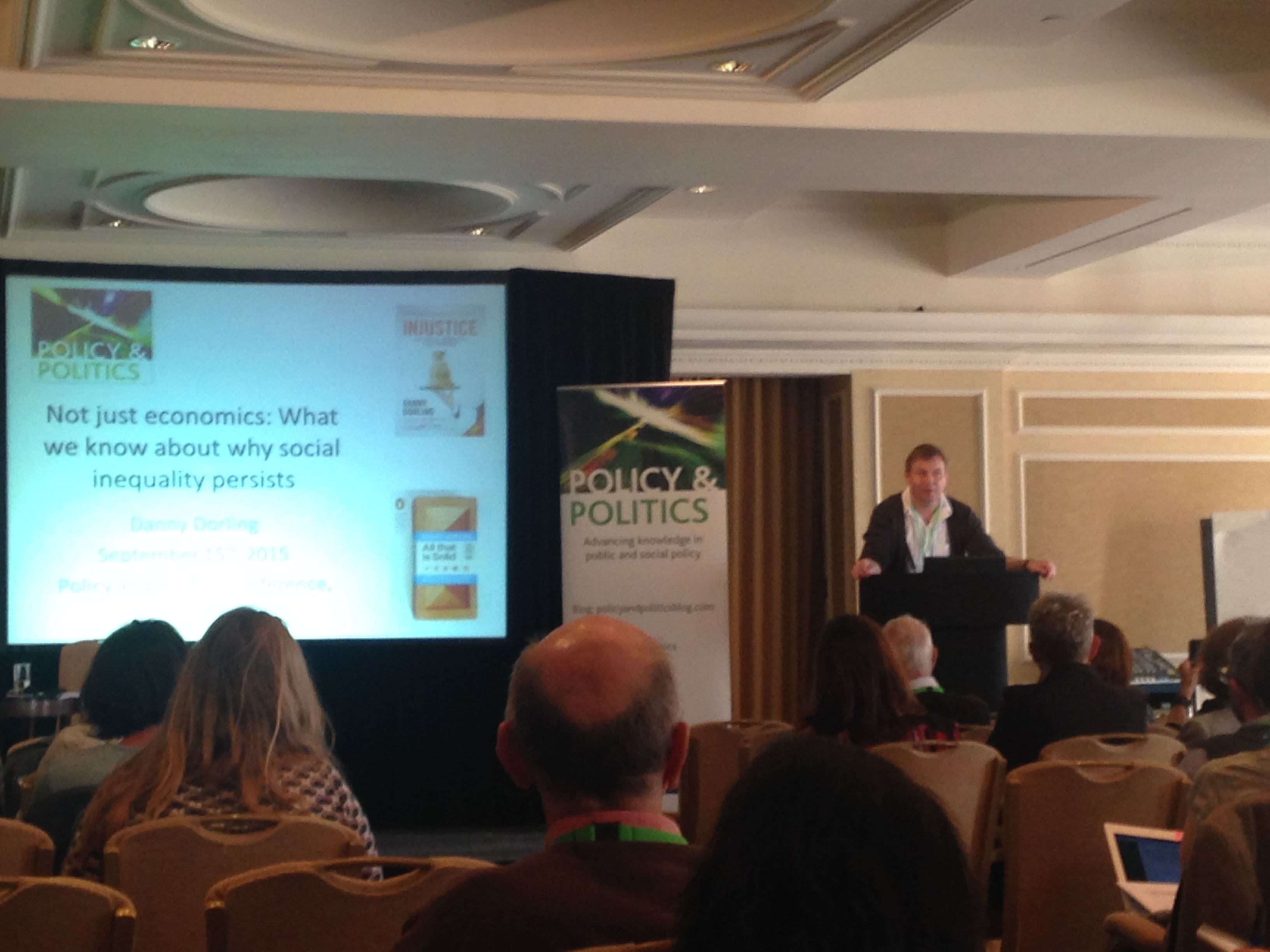
The second plenary session of the Policy and Politics Annual Conference was delivered by Prof. Danny Dorling, who provided a shocking and somewhat scary analysis of the increasing levels of inequality in the UK. The big question for us all to consider is why there is no consistent challenge to this situation and why we appear to accept the disparities that exist. Why is it acceptable and why would anyone think inequalities are a good thing?
One answer to the question is that we don’t actually realise how unequal we are as a society. But a quick look through some of the statistics soon provides the evidence we need. Danny took us through graph after graph that more than adequately demonstrated just how big the problem is and that it is increasing. One example to illustrate the point, in 2010 the best off tenth of the population in the UK were nearly 14 times better off than the worst off tenth. By 2015 this had grown to more than 17 times better off, and if the trend continues on a similar course in less than 20 years the best off will have over 24 times as much disposable income as the worst off. The problem is that the change is gradual, we don’t notice it so much and we get Continue reading →
by Tessa Coombes, guest blogger for P&P Conference 2015.
The Policy and Politics Annual Conference 2015 kicked off with a fascinating challenge to our thinking about democracy and the state. Mark Purcell, from the University of Washington, took us on a philosophical journey of discovery about the true meaning of the word democracy, concluding with the notion that the state and democracy are the antithesis of one another.
Mark offered us what he termed a minor current of thought to haunt our discussions and to stimulate new and better currents of thought throughout the conference. He premised his presentation on the idea that the state and democracy need to be seen as antithesis and that we do indeed need democracy.
The debate about power, according to Mark, is about more than we think it is and we need to think about it differently; we need to think of it as power to rather than over. That is, all people retain power to act into and change the Continue reading →
Recently, there has been much debate about the best approach to take with those returning from the conflict in Syria and Iraq. Various proposals have been mooted, from forcing them to attend ‘deradicalisation programmes’ to banning them from returning to the UK. Relatively few of these ideas are rooted in a strong evidence base. That is in part because we still have much to learn about what might motivate someone to permanently reject violent extremism.
Although knowledge about what might inform the movement away from terrorism has developed in recent years, we have only a limited understanding of the aims of this work. Questions remain over what it is that interventions with those who have been involved in terrorism should seek to achieve. Is it ‘deradicalisation’, commonly understood as attitudinal change? Or is it disengagement, focusing more on behavioural change? And by what measures might we recognise ‘successful deradicalisation’? This last question is the focus of my recent paper: ‘Conceptualising ‘success’ with those convicted of terrorism offences’.
These questions are not only of concern to policy makers and academics, they are a significant issue for those on the frontline of this work, those organisations, such as the probation services, who are tasked with supervising convicted ‘terrorists’ when they have been released from prison. In my research with statutory and community-based organisations working with former prisoners, this question of what the work was seeking to achieve represented a significant gap in the knowledge base.
To better understand this issue, I spent many hours interviewing and observing practitioners. Through this, I developed a framework for understanding what the work was trying to achieve. Grouped under two broad headings of public protection and reducing the risk of reoffending/encouraging desistance, I identified 13 measures by which to interpret the processes involved with trying to move someone away from extremism. Three broad conclusions about what might constitute effective engagement emerged from the research:
Rather than attempting to explicitly ‘deradicalise’ or ‘deprogramme’ individuals, there was a concerted effort to reintegrate them back into society. For example, helping them to develop more positive social networks or supporting them as they tried to find work.
Instead of focusing exclusively on trying to deconstruct the motivation to reoffend, there were attempts – particularly from community-based organisations – to redirect this motivation. For instance, if someone was concerned with issues around social justice, there were efforts to find an outlet within the local community that might enable the individual to pursue these goals in a way that contributed to, rather than threatened, society.
Finally, attention was paid to developing resilience to negative influences that might undermine any growing commitment to reintegrating back into wider society. Developing former prisoners’ critical thinking skills was one way practitioners tried to do this, enabling them to interrogate the information designed to motivate them to re-engage in extremist networks in a more critical light.
Importantly, the processes involved with moving people away from extremism are complex and highly individualised. Practitioners therefore reflected the need to listen carefully to each person’s account of his or her involvement, and understand the particular issues relevant to their journey into and out of extremism. The need to approach the person holistically rather than focusing on specific ideological, attitudinal, or behavioural measures of ‘risk’ also emerged as an important part of best practice. Finally, taking into account the significant barriers faced by these former prisoners was vital. People convicted of ‘ordinary’ crime face challenges finding work and being accepted into the community, those convicted of terrorism offences face even tougher hurdles.
However difficult it is to talk about ‘rehabilitating terrorists’, if the aims of successful reintegration and long-term public protection are to be met, it is a conversation we need to have. Not least because meaningful reintegration demands not only a commitment from the individual, but also one from society, that they will accept the individual back into the community and allow them to move on.
Lord Anthony Giddens presented the Policy and Politics Annual Lecture, in Bristol, on Tuesday 17th March. The theme of the lecture was to consider what recent progress has been made on climate change and what stops us doing more. Lord Giddens concluded his lecture with a proposal for the need for a new paradigm to provide the change needed to generate the radical solutions that are now necessary.
Lord Anthony Giddens first wrote “The Politics of Climate Change” in 2007/08, a time of optimism and hope, when change to reduce carbon emissions seemed top of the agenda both nationally and globally. It was a time of opportunity, seized by politicians like Al Gore who published his book and produced the film “An Inconvenient Truth” to great acclaim. It was also the time of the biggest United Nations meeting on climate change in Copenhagen where over 100 nations met to discuss measures to address the problems of climate change and reducing carbon emissions.
Lord Giddens moved us through this period of optimism to one of dashed hopes and increasing fears following the lack of agreement in Copenhagen. He talked about the difficulties of measuring climate change and the range of indicators needed to assess impacts. He argued that despite the advancements in science and knowledge, there are still many sceptics who refuse to acknowledge the very real changes we are experiencing. Indeed, one of the problems with climate change, he explained, lies in its irreversible nature, the fact that once greenhouse gases are in Continue reading →





 Policy & Politics Journal Blog