Policy integration in local government: what are the barriers?

by Nicolai De Wulf, Joris Voets and Astrid Molenveld

Cities nowadays are confronted with a wide range of complex societal issues and, correspondingly, the expectations and challenges for local governments have grown. Within this context, they are often praised for their dynamism and their ability to achieve results. As a consequence, local governments often enjoy a large degree of trust from their citizens. But what are the barriers local policy makers face when trying to coordinate and integrate policies? Our recent article in Policy & Politics, entitled ‘Policy coordination and integration in local government: perspectives on barriers’ shows that three distinct perspectives emerge, which we describe in more detail below.

Complex societal issues mentioned are difficult to approach from within one single policy domain. Take, for example, the issue of sustainable mobility, which encompasses mobility, sustainability and the environment, urban planning, the local economy and so forth. Policy issues that span multiple policy domains (horizontally), also involve multiple political and administrative actors and interests (vertically). As such, complex societal issues challenge the traditional modes of collaboration between politics and administration.

Continue reading

Analysing the contextual factors that promote and constrain policy learning in local government

Kristin Taylor, Nathan Jeschke & Stephanie Zarb

authors 2

In spite of the best efforts of government, sometimes policies do not work as designed. As scholars of the policy process and citizens in a representative democracy, our normative expectation is that government should learn when policies do not work to improve outcomes for communities. This is especially true in the wake of a natural disaster. Disasters can serve as an opportunity for governments to engage in policy learning by updating beliefs about policies and learning lessons about policy tools, instruments, and politics. Often, disasters can reveal physical and social vulnerabilities and gaps in preparedness that unevenly distribute the risk of damage within a community. In our recent article in Policy & Politics , we investigate which conditions constrain or promote policy learning. Understanding these conditions is of critical importance in gaining a better understanding of why some governments learn to improve policies after a disaster and some do not.

Continue reading

Updating your course reading lists? Check out our essential reading recommendations for Public Policy, Politics and Social Policy from Policy & Politics

All articles featured in this blog post are free to access until 31 October 2021

KoebeleIntroducing Elizabeth Koebele: our new Digital Associate Editor for Policy & Politics, and Assistant Professor in the Department of Political Science, University of Nevada, Reno.

I am thrilled to have begun serving as Digital Associate Editor for Policy & Politics in January 2021. I have spent the last few months taking over this position from my colleague, Oscar Berglund, who now serves as one of the journal’s co-editors. As many of us are beginning to plan for our policy and politics-focused courses next semester, I figured what better way to celebrate joining the P&P team than to share with you some of my favorite Policy & Politics articles that make a great fit on a variety of syllabi? I hope this saves you time and effort in mining our recent articles, while also ensuring your course materials reflect the latest research from the frontiers of the discipline.

My initial suggestions are structured around two general topics that I hope many of you find yourself teaching or studying: one focused on knowledge, and one focused on actors/influence. I’m also sharing my top picks for readings on an increasingly popular policy topic: policy diffusion/transfer. In each case, I’ve recommended three articles that represent some of the most significant research we’ve published recently. Please let me know what you think when you’re compiling your reading lists for the start of the academic year. I’d value your feedback and suggestions for future topics to cover! Continue reading

Virtual issue on Central-local relations

Sarah_Brown_credit_Evelyn_Sturdy
Image credit: Evelyn Sturdy at Unsplash

Sarah Brown
Journal Manager, Policy & Politics

In our second virtual issue of 2021, we focus on central-local relations and feature some of the latest research on that topic from a range of different perspectives and three quite different political systems. Against a backdrop of austerity coupled with an imminent global recession resulting from the pandemic, the politics of central-local relations and their impact on policy are, we believe, even more topical than ever. So we hope that you enjoy this short collection featuring some of our most recent scholarship on this theme. Continue reading

What happens when policymakers limit increases in property taxes?

Yarram et alSubba Reddy Yarram, Brian Dollery and Carolyn Tran

In our recent article in Policy & Politics,  we examine the impact of a ‘cap’ on property taxes in the local government system of the Australian state of Victoria. ‘Fair Go rate capping’ was introduced in Victoria from 1 July 2016. Prior to this, general rates charged by local councils in Victoria had grown by an annual average of 6% over a 10 year period. Under the Fair Go policy, the Minister for Local Government sets a maximum permissible rate increase on the advice of the Victorian Essential Services Commission. The actual rates cap was set at 2% for 2016-17 and 2.5% for 2017-18 based on the forecast Consumer Price Index.

In principle, the rate caps limit the ability of local councils to raise revenue required to fund their ongoing operations, often in the hope that this will stimulate increased operational efficiency. In our article, we empirically investigated two main questions: What were the short-term impacts of the Fair Go rate capping on different types of municipal expenditure? Did Fair Go rate capping have a differential impact on the different categories of Victorian local councils? Analysis of these questions can shed light how best to frame local government policy tailored to accommodate different categories of local council facing different expenditure constraints. Continue reading

SPECIAL ISSUE BLOG SERIES: Blog 2 – Behavioural insights into what motivates public employees on the front line to respond to reforms championed by elected politicians

Special issue blog series on advancing our understanding of the politics behind nudge and the ‘behavioural insights’ trend in public policy.

Don leeDon Lee 

My recent article in Policy & Politics investigates how bureaucrats on the front line make policy implementation decisions. Political leaders and lawmakers tend to assume that street-level bureaucrats will follow their direction and implement polices as they devised. However, front line workers, in fact, have room to interpret the policies in the implementation process. To understand what important factors influence street-level bureaucrats’ implementation decisions, my article examines two central elements in policy implementation: 1) whether street-level bureaucrats’ policy orientation is congruent with that of elected politicians and 2) to what extent street-level bureaucrats have discretion in implementing policies. Continue reading

Local Government by Lottery?

joseph drew p&P blogJoseph Drew

One constantly hears the slogan that local government is closest to the people and thus serves the people best.

But is it really close to the people and which people does it serve?

When did you last attend a council meeting? When did you last feel that you had a direct voice in a local government decision that affects your life? Do you know the name of your Councillor? Did your Mayor keep their election promise – did you even know what the promise was?

The truth of the matter is that most of us will answer negatively to all of these questions. That’s probably why most of us grumble about ‘crazy’ local government decisions but stand impotently by as the same group of Councillors are returned at the elections every few years.   Continue reading

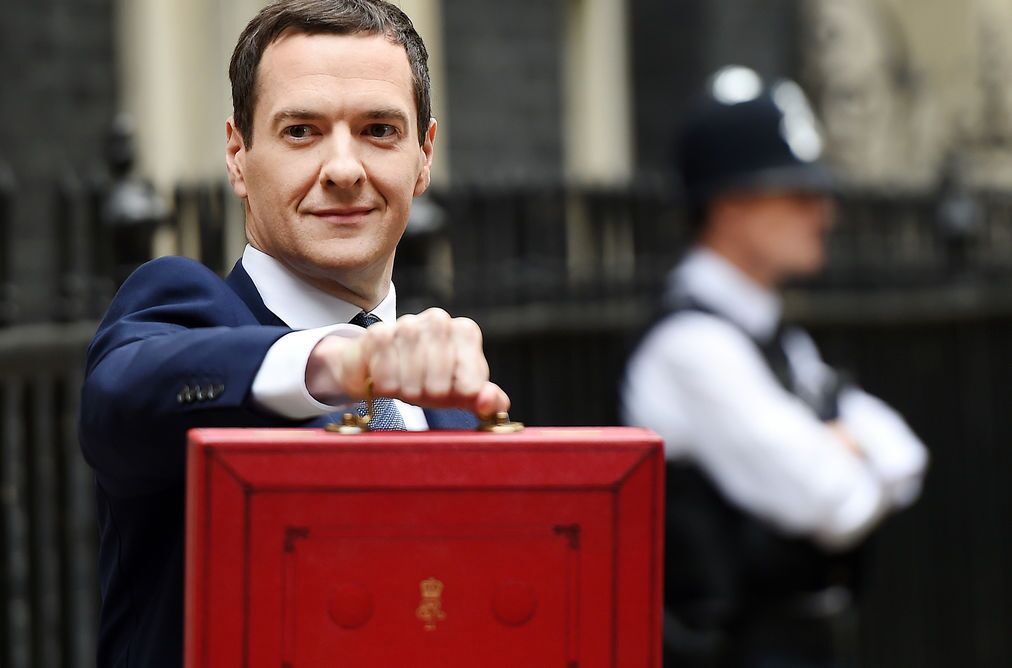
Winners and losers in George Osborne’s spending review

by Peter Taylor-Gooby, Professor of Social Policy, University of Kent. This article was originally published on The Conversation

George Osborne
George Osborne

George Osborne always plays the role of the smiling conjurer who pulls the rabbit out of the hat and steals the scene with aplomb. In his 2015 spending review and autumn statement, the surprise announcement was that cuts to tax credit will not be as stringent as expected – although housing benefit claimers are the losers. Concealed within the chancellor’s hat are cuts of more than 50% in grants to local government and tense optimism about the growth, employment and pay forecasts on which everything depends.

The chart below gives the main winners and losers in the spending review over the period up to 2019-20. Cuts are legion. The winners are the big players – the NHS and pensions – both accounting for about a fifth of total spending – which receive real increases of 3 to 4%.

https://datawrapper.dwcdn.net/X00ta/1/

Pensioners will benefit from the transition to the new flat-rate pension from next April onwards, increasing spending in this area by some 4%.

International development has a 21% increase, although some of the new money will be spent to aid security objectives and some in the UK on Syrian refugees. The new Single Intelligence Account for the security Continue reading

Local associational life and attitudes towards local government

Jacob Aars and Dag Arne Christensen

Jacob Aars and Dag Arne Christensen discuss their recent paper in Policy & Politics, which is free to download in September 2014. 

The role of voluntary associations in promoting political capacities and involvement has received a great deal of attention over the last 15-20 years. Extra-parliamentary organizations are assumed to produce a number of positive effects not only for individual members, but also for neighborhoods and local communities at large. They are thought to perform a social role, as the fabric that contributes to uniting society. In turn, associations are supposed to play a political role in fostering citizens’ capacities for taking part in collective action. Continue reading